1
For a long time Evie had lived in the city, and when the day came that everybody was evicted from their homes—pots and pans and shoes and postcards piled high along the sidewalks, clothing bunched into trash bags, wardrobes and candelabras waiting under the summer rain—she assumed she’d find an alternative.
Why not? she thought, her forehead damp with sweat as she hiked the aluminum stairs to her office. The elevators, as if in the spirit of municipal implosion, were not operational. I’m smart, she thought. I have skills. Or, sort of. Maybe. The willingness, at least, to learn them.
“I need a raise,” she said, finally sitting across from her supervisor in the hollow, exposed-beam building that was her place of work. They were in his office, which was really a small, carpeted area partitioned off by a few Japanese screens he’d found near the bins. She sank in her seat, exhausted.
“A raise? Why?” There was a bag of popcorn on his desk and he did not wait to finish his sentence before he fisted an entire ball of kernels into his face.
“You know why,” Evie said. “I’ve been kicked out. We’re all on the street. I had to empty my apartment this morning.”
She continued, “I need money for a house. I need money for another deposit or a down payment or—” She paused here. “Or else.”
“Evie.” Her supervisor sighed, angling his chair away from her.
“Just look,” she said. She brought out her portfolio and nudged it toward him. Evie’s job was in design, which mostly entailed choosing typefaces and superimposing them onto photographs taken by someone else—a luxury sailboat anchored off the white sands of Tahiti, for example; a tattooed ceramicist staring from her studio; a plump, healthy chicken poised for slaughter. It was an easy job; sometimes it felt fake.
Gregory—that was his name—leaned forward and rubbed his chin. “I’ve seen your work,” he said. “You know I’ve seen all this.”
“Just peek,” Evie said. She opened it to a few specific pages.
“Unh, unh,” he said, nodding. Evie used her index finger to point out the striking contrasts and balances, the alignment and repetition, the various nuances that made the work unmistakably and inescapably hers. “Unh,” he said, smiling politely. He choked a little on his popcorn and pounded his chest, coughing. “Unh,” he said when it was over.
“Look,” he said, bringing his face up to meet hers and leaning back in his fabric chair. Evie registered dark circles under his eyes. “We can’t give you a raise.”
“Then where am I supposed to live?” she asked.
“Where am I supposed to live?” Gregory responded. He brought his hands up by his head and tugged at his cheeks in frustration. “This isn’t just happening to you. I don’t own either. I’ve got to move too. I had a rent-stabilized apartment. A big, beautiful rent-stabilized apartment in Manhattan, Evie. Do you understand how rare that is?”
Evie nodded. She squinted her eyes and bobbed her head—sympathetically, she thought. “Wow,” she said, still nodding.
“And how am I supposed to get a moving van through these streets? “It’s—” Gregory paused, mulling over what it was. “Chaos. Chaos! And I’ve got the dogs to take care of.”
Evie pictured Gregory’s dogs, two skittish spaniels that habitually shat in the office fiddle-leaf figs. He treated them with the kind of loving reverence usually reserved for religious deities, the newly born, or the astoundingly old. She remembered the day he’d first brought them in. They’d been rescued from a bankrupted breeder in Virginia, he’d announced. He’d gathered the dogs—Meryl and Elizabeth—up in his arms and told their short, sad stories with actual tears in his eyes. Then he’d set them down and attempted a classic handshake trick, which Meryl executed with a desperate, almost drunken pleasure while Elizabeth stood back sulkily and licked her crotch. “They aren’t show dogs,” Gregory had said. “But they could be if they tried.”
“Why don’t you give yourself a raise?” Evie asked, trying to get back to the subject.
Gregory rolled his eyes. “That’s not how it works.”
“But you’re the boss.”
“Look,” said Gregory. He closed Evie’s portfolio and kept it shut with his elbow, as if it might snap open at any second, jaws agape, ready to bite. “A little cash for a deposit wouldn’t do us any good. So,” he continued. “In short: No. Just find wherever you can go. Find anything. Accept everything.”
“For how long?”
“How am I supposed to know? Until the mayor is behind bars, I guess. Until this blows over. Two years. Twenty.”
Evie gathered her portfolio and left Gregory’s office. It took a while; she had to unfold the second Japanese screen, lift up the first, shift the third, then wriggle through the slight gap she’d made between them.
Accept anything, she thought, making her way back to her apartment or, rather, the curb below her apartment, upon which sat her bookcase and bed, kitchenware and toiletries. It had been over a year since the mayor, faced with a dwindling budget and a critical lack of both public and private support, had announced the city’s landmark deal with the world’s leading vacation rental company. Eviction restrictions were lifted. Rent regulations were overturned. There were incentives for landlords, grants for restoration, an influx of federal funds.
The actions had all been engineered to seem so gradual, Evie thought, even banal. One subtle slight after another. Nothing shocking, per se. And yet they were here, on the day that the city’s final and most radical amendment had gone into place and everyone was out, on the street, looking up at their soon-to-be-renovated apartments and down at their soon-to-be-sanitized streets and feeling tricked. By their landlords. By the city. By their mothers and fathers. By their ancestors. By Aha!: Apartments and Homes Anywhere. By God.
How? Looking back, Evie realized, it had all led up to this exact moment, this tragicomic climax. Evie was intelligent, basically, but not very perceptive. She had never been good at crunching the numbers, anticipating the consequences, drawing a through line between the discrete events of her life and the world at large.
Other people, however, were more prepared; they made quick decisions with resolve, pooled their resources, and acted swiftly, as if they’d known all along. There was her friend whose father had left him a slot of land in Topanga. Over the last five years he’d culled the property and erected a shed. He’d insulated the shed with straw panels and finished it with tadelakt. It had a farmhouse sink and a Jacuzzi out back. Another, an old supervisor, had spent her savings on a car that doubled as a well-appointed efficiency apartment in a pinch. Then there were her two downstairs neighbors who had recently had a baby. Just one month prior they told her they’d found a small place near the river along with six others. They’d all pooled their funds, bought the apartment as Tenants in Common; they’d moved in and now lived there as one big, happy family. Together they’d raise the child. In winter they’d take turns with one pair of mittens. They’d cook with a single frying pan for the nine of them. They’d share one sock.
* * *
The vitamin shop downstairs from her former apartment, owned by her landlords, or former landlords, agreed to let Evie store her things in the basement for the day while she figured out where to go. It was a magnanimous gesture, really, that they allowed her to store anything at all. They certainly didn’t have to. Their fierce matriarch, Edita, had owned the building for a couple of decades at least. The family was a medium-sized and aggressively unhappy one.
Edita had two sons, both constitutionally miserable, who spent their days perched on stools out front, listening to the radio. They were the shop’s ambivalent managers, and there was no end to the mistakes they made, nor the nefarious disarray into which they let their daily operations descend, at least according to Edita. The boys, as she called them—though they were adult men—handled the shop’s patrons, bodybuilders and wrestler types, who could often be seen darting in and out of the building as if they had something to hide. Organic Supplements was not doing well. Edita would stop by unannounced to remind them of this, pulling up in her shiny black Escalade, barking orders, and pinching their biceps with a precise and acrylic force that even Evie could feel.
The older brother, Obed, had a beautiful daughter and a beautiful, young ex-wife, both of whom had left him, absconding to the West Coast. Obed had initially tried to follow them, applying to rent an apartment and looking into jobs, although what else he was qualified for was unclear. But his mother, when she got wind of the plans, quickly kiboshed the whole thing. It was her money, it was all her money. How could Obed ever move so far away from his mother, from his mother and all her money? After a month of fighting, most of which was quite public and in front of the store or, even worse, in the interior hallway, it was over; he resigned himself to his station on his stool outside Organic Supplements. Edita won.
As a teen, Obed had been something of an athlete. When Evie had first moved in ten years prior, he still played pickup games at the neighborhood courts in his old varsity jacket. Now he mostly talked quietly with the neighbors, sat on his stool, and intermittently intercepted Evie’s mail.
“So you’ve got a sister,” he might say, clearly having read the return address on the envelope. “Is she as pretty as you? Does she like fat guys?”
“She’s prettier,” Evie would say, “and younger.”
Why did she taunt him? Now that everything she owned had been thrown to the curb and she would, officially, never again sit on the edge of her wide, wood-framed window and watch the smudged sun sink under the skyscrapers in the distance and was relying exclusively on Obed’s grace to keep her personal items safe for the rest of the day, many of the things she’d done began to seem unkind.
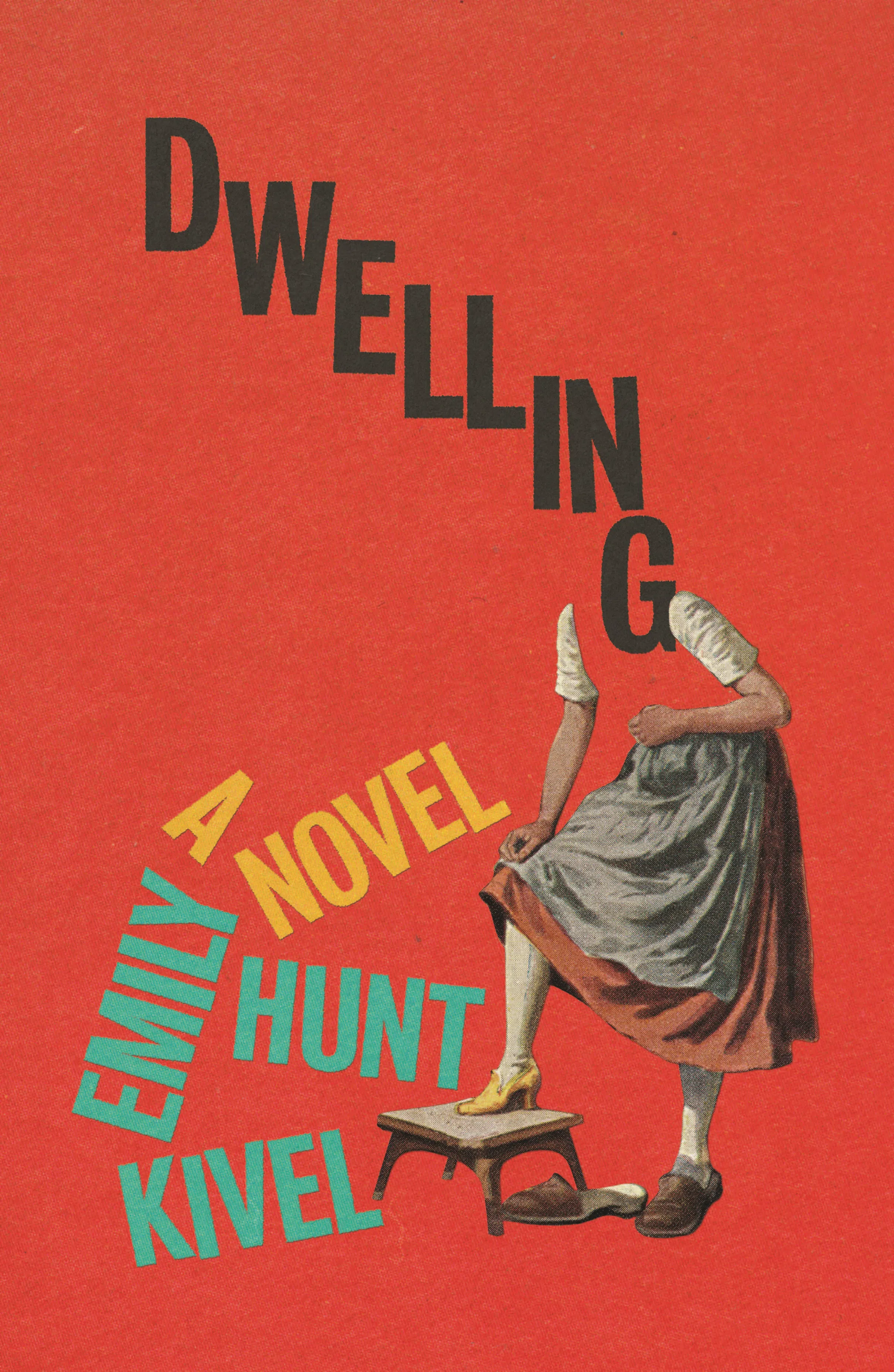
Copyright © 2025 by Emily Hunt Kivel