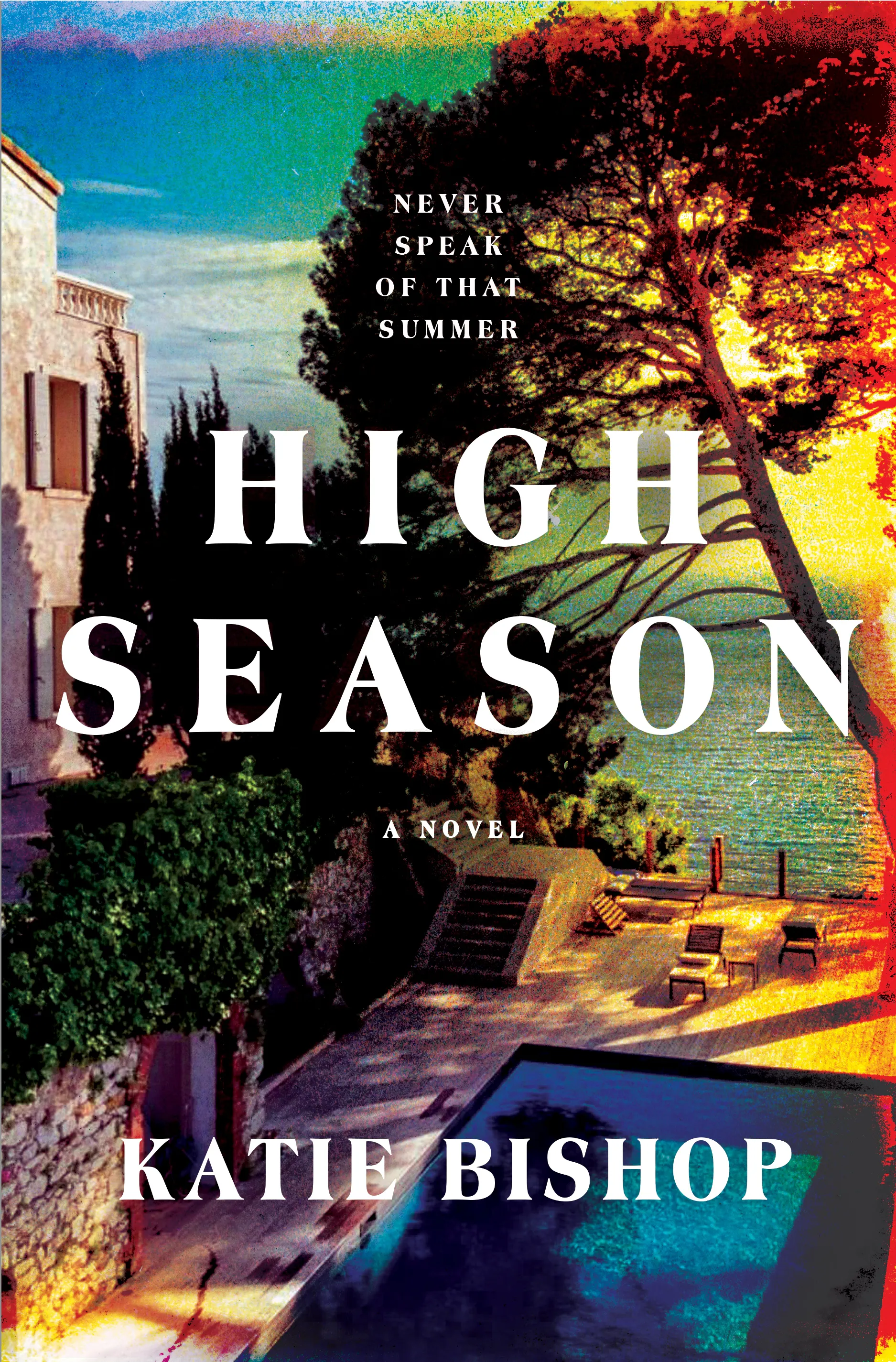
ONETWENTY YEARS LATER
2024
The dinner party had been Ryan’s idea.
He had suggested it a week ago, when he and Nina were having drinks at his members’ club in Soho—an anniversary date that had morphed into an impromptu celebration of the job offer that had landed in her inbox that morning.
“Your first proper, grown-up job,” he had said. “That’s worth cracking a bottle of good wine for, surely.”
Nina had tried to rebuff the idea at first. She was twenty-five, after all, and it had taken her much longer than most to arrive at the promised land of full-time employment. The fact that she had only just secured her first salaried wage—something that almost all her friends had enjoyed for years—felt like an embarrassing admission rather than something to celebrate. But Ryan was adamant. He would plan it all. Nina wouldn’t have to worry about a thing.
Now they’ve had several bottles of good wine, more than Nina has kept count of. She’s tipsy; a starry haze has settled over the evening, the sun melting just below the rooftop beyond their flat. The table is strewn with empty plates, still slicked with salad dressing and seafood shells, everyone too drunk to suggest clearing up. Nina sits on the windowsill, her glass half-empty, her white wine warmed through with the early summer heat, as Ryan tops up everyone’s drinks.
“Cheers.” Her brother Blake leans over from his seat on the sofa to clink his glass against hers. “You worked hard for this, you know. You deserve it.”
Nina can tell that he’s drunk by the way the rims of their glasses tap together slightly too hard, a tiny tsunami of wine sloshing over the edge. She has worked hard for this. A postgraduate degree and years of clinical training, not to mention the endless job applications, the slog of rejections before, finally the offer that came through last week. An assistant clinical psychologist role at a small London clinic.
“Child psychology, though,” Blake says now, shaking his head. “Bit close to the bone, don’t you think?”
“So you’ve said,” says Nina. “About twenty times, actually.”
She gives him a gentle nudge.
“Come on, Blake,” she says, smiling. “You understand why.”
He sits back heavily in the chair. “I just think it’s a bit … morbid, isn’t it? You know that Mum’s still hoping you’ll change your mind.”
Nina takes another sip of her wine. Châteauneuf-du-Pape Blanc. Their mother’s favorite.
“That’s not all she’s hoping you’ll change your mind about,” Blake says.
He reaches out for Nina’s hand.
“Come back this summer,” he says, his voice wheedling. “Please. It would mean a lot to Mum. It would mean a lot to me.”
“You know I can’t,” Nina says.
She starts to stand. Extracts her hand from Blake’s.
“I’ll go and sort pudding.”
“Nina, don’t be like that. I didn’t mean to—”
“It’s fine, Blake. Just not tonight, OK? Not when Ryan’s put so much effort in. We’ll talk about it another time.”
* * *
Later, Nina fills the sink full of scalding hot water. The flat has two dishwashers, but she likes to wash up by hand. She likes to look out over the city through the kitchen window as she scrubs, a small, mindless task as voices drift from the living room. Blake and Ryan are discussing her brother’s flight to the South of France tomorrow, his plans to spend summer with their mother at the family home on the Côte d’Azur. Her best friend Claire is fussing with the antique record player that once belonged to Nina’s grandfather.
Nina piles pans into the sink to soak. Outside the enormous sash window, the sky has that strange cerebral quality that only comes at the cusp of summer. Pink clouds blossoming against a purple twilight. Heat crawling upward as if trying to escape the city.
Nina always forgets how suffocating London gets at this time of year. How the air tastes of car fumes, the roads tangled up with people escaping for cooler patches of the country. Smoke from balcony barbecues. Sweat rising from bodies packed into tube carriages. The warm tarmac, the rubbish starting to stew and bake in unemptied bins. Not for the first time, she has the overwhelming urge to take Blake up on his offer. To go back to the place that somehow, in spite of everything, still feels like home.
“God, I would kill for this kitchen.”
Claire marches through the industrial glass doors that lead from the lounge, a pile of plates stacked up in her hands—three scraped, only Nina’s almost untouched. She deposits them on the countertop and runs her fingers down her linen skirt as if checking that she hasn’t dropped the dregs of four sticky toffee puddings down herself. She hasn’t, of course. Nina’s best friend always looks astonishingly put together, with her rotating selection of pastel-colored headbands and the same signature lipstick that she’s worn every day since Nina met her when they were both eighteen, on their first day of university. Nina had stayed close to home, in London, her mother insisting that she wouldn’t be able to cope with a big move. Still, she had been terrified on her first day, embarrassed that her mum had insisted on their private driver dropping her off at her halls of residence. She had clutched a bottle of gin that she had planned on using as a peace offering for her new flatmates as the porter informed her, one eyebrow raised, that John Lewis furniture deliveries had been arriving for her small single room all week (Well, you can’t sleep in a bed that someone else has already slept in, her mother announced when Nina had called her, mortified, as the porter looked on).
Claire had bowled into the shared kitchen just as Nina, red-faced, oversaw a Fortnum & Mason order that the delivery driver had insisted on transporting straight to her refrigerator.
“Gin!” she had announced, spotting the forgotten bottle abandoned on the countertop. “It always makes me a bit loopy, but I never learn. I’ve got tonic in my groceries somewhere, if you want to do a trade?”
It was one of the things that had drawn Nina to her. Claire seemed like someone who was completely unfazeable.
“Ryan’s flat is incredible,” Claire continues. “How much did he pay for this place again?”
Nina doesn’t remind her that it isn’t Ryan’s flat. Not anymore. It’s their flat now. Has been since Nina moved in eight months ago. But Claire’s mistake is understandable. There’s so little of Nina in the swathes of marble, the engineered-wood floors, the way the entire flat is rigged up with gadgets—speakers and smart systems running through the walls like veins. Nina makes a mental note to put up some pictures before Claire comes round again. She should ask Blake what happened to all of the art that their mother had in storage. Perhaps she could find something a little more like Nina.
“It needed work. He got a good deal,” Nina says, even though it’s not exactly true. She hates talking money. Wants to avoid getting into a discussion about how Ryan is technically letting her live here for free, an agreement that started when Nina was job hunting and which has yet to lapse. She’s offered to pay rent, of course, but Ryan said that it wouldn’t be fair when only his name was on the mortgage.
“Hey, your brother is looking good tonight,” Claire says, lowering her voice. “Did you say that he broke up with … what’s her name?”
“Jazmin?”
“That was it. Jazmin. Because I kind of got a vibe from him over dinner. Did you notice?”
Nina turns away to hide her smile. She’s used to people being this way around her brother. She had barely even got a chance to know Jazmin before Blake mentioned, in passing, that he had a date with a girl he’d met at an art gallery opening.
“What about Jazmin?” she had asked.
“Oh, Jazmin,” Blake had said, as if Nina was bringing up a long-lost acquaintance rather than the girl they’d all been out to dinner with the week prior. “Well, we wanted different things.”
As usual, Nina had wanted to say. Blake is in his late thirties, but he seems so far from settling down that Nina sometimes feels embarrassed by how early she herself has fallen into long-term coupledom. She has become used to meeting a new girlfriend of Blake’s every few months, some sweet and beautiful woman who seems completely besotted with her brother.
“You know Blake,” Nina says. “He can turn on the charm when he wants to. Don’t read too much into it.”
“Right,” says Claire. “Oh well. My turn eventually.”
She bumps her hip against Nina’s to show that she’s joking.
“Hey, your phone was going off, by the way. Want me to grab it for you?”
“It can wait,” says Nina. She pulls the plug from the sink so the water can drain, disappearing in a swirl. She is here. She is with all of the people that she cares about the most. “Whoever it is, I’m sure they can wait.”
Claire sways slightly on her feet, wraps her arm around Nina and pulls her close.
“I’m so proud of you, babe,” she says. “You’re killing it.”
And somehow, Nina can’t quite bring herself to point out Claire’s poor choice of words.
TWO
2024
Nina had told Ryan what happened to her sister on their second date.
He had been sitting across from her, pouring her a glass of red wine.
“So,” he had said. “Do you have any siblings?”
The restaurant hummed around them, as if Ryan hadn’t asked Nina the question that she had spent most of her life dreading.
“It’s a bit complicated,” she had said.
And it had all begun there.
Nina had met Ryan two weeks earlier at a recruitment fair in a drafty university hall. Ryan ran a technology start-up that had a stand, and even though Nina didn’t have the slightest interest in data programming she lingered, picking up a leaflet and pretending to read. He had asked her if she was considering a career in the tech sector, and when she admitted that she was already signed up to do a psychology master’s next year and had only come along to keep her best friend Claire company, he had grinned.
“A master’s in psychology?” he said. “Well, clearly you’re too smart to work for us.”
She had liked him immediately.
“Why psychology?” he had asked her on their first date, at a cocktail bar with views over the Thames.
Nina had taken a sip of the too-sweet mojito she already regretted ordering and considered her answer.
“I want to be able to understand people,” she had said.
“Do you think that you need psychology to understand people?”
“I think that you need psychology to understand yourself, never mind other people,” she had said, and then been faintly embarrassed by how easily the answer came. What it might say about her. She did not want this smart, older guy who seemed so self-assured to think she was the sort of person who didn’t really know or understand herself, in spite of her psychology degree.
But he had just nodded, and pushed his square-framed glasses up the bridge of his nose in a way that Nina found sweet, and slightly nerdy. Attractive in a way she couldn’t quite quantify.
“Good answer,” he had said, as if it were a test and Nina had passed.
It was Ryan who had suggested dinner for their second date. The idea had felt strangely adult, a performance of romance that Nina wasn’t used to. Dinner dates were the things that her mother used to go on, and the words evoked memories of perfume and silken dresses, her mother patting her hair in front of a long mirror and telling Nina and Blake that there was food on a plate in the refrigerator if they got hungry. Nina was more accustomed to university romances. Sleeping with a guy long enough during her first year to eventually be called his girlfriend. A friend with benefits she had fallen for two terms before who got a place on a graduate scheme in America, and had looked at Nina with genuine disbelief when she suggested there might be something more between them.
But she liked how confident Ryan was. How intelligent, and interesting. She liked that he seemed completely oblivious to celebrity gossip, furrowing his brows and saying Who? when Nina referenced Kris Jenner.
She liked the way he looked at her with approval in his eyes. The way it made her feel.
And now, she was sitting across the table from him, knowing that what she was about to say could change everything.
“I’ve got a brother,” she said. “Blake. He’s twelve years older than me.”
From the table next to them came the rise and fall of laughter. A murmur of conversation.
Nina took a deep breath.
“And I had a sister,” she said. “She and Blake were twins. But she died when she was seventeen.”
She had Ryan’s full attention now.
“Oh my god,” he said. “I’m so sorry.”
“It was a long time ago.”
“But still. That must have been terrible.”
“I don’t really remember much about it,” said Nina. “I was only five.”
She lifted her drink and took a long, slow sip. The heat of the alcohol slid straight through her. She set down her glass harder than she had intended.
“It was actually a pretty big thing, at the time,” Nina allowed. “She was killed by somebody.”
Ryan didn’t speak. Didn’t move.
“There was a trial,” Nina said. “A girl whose mother worked for us, the housekeeper’s daughter. She used to spend all her time around our house. Babysitting me, or helping out with the housework. She was sixteen. I had to give evidence.”
For the first time in Nina’s life, the words came easily. It was something she’d talked about so rarely, even though it was often the first thing that people knew about her. She hadn’t even told Claire until they’d been friends for over a year, one night after drinking cheap merlot out of coffee mugs, sprawled on Nina’s bed.
“I already knew,” Claire had confessed, her mouth stained red. For the first time in all the months Nina had known her, she was bashful rather than brash. Embarrassed for Nina, for thinking that she had a secret, when all the world knew.
Ryan’s eyes widened.
“You gave evidence when you were five?”
“I had to,” Nina said. “I was the only one who saw.”
“You saw?”
His voice was quiet now.
“Yes,” said Nina. “I saw.”
“God,” he said. “That’s … well. It must be awful. To have seen that. How could you…”
He shook his head, the words seeming to fail him.
“It must be terrible for you. To be able to remember seeing that.”
Nina swallowed.
“Memory’s strange,” she said. “It’s hard for me to … the details. You know?”
Ryan didn’t say anything, and Nina staggered to fill the space.
“I mostly remember the trial,” she said. “And the aftermath—being taken into a room and asked to draw what happened. I remember exactly what I drew. The pool. My sister—Tamara. Her name was Tamara. And her. Bending down. Pushing her under the water. Josie Jackson. She denied everything, of course. Said that I must have made the whole thing up.”
She paused to take a sip of water, her mouth suddenly too dry after too much wine. How could she explain it? The gray rooms and long corridors. The year of Nina’s life that seemed lost to that drawing, entire days and weeks stretching out between the felt-tip lines. The blue of the pool. The black squiggle of Tamara’s hair. The fluorescent pink of Josie Jackson’s arms.
And all the years since. How she had had to move schools because the other girls seemed afraid of her, as if death was catching. How, even though the police and the social workers spoke gently to her—telling her she’d done the right thing, that Josie Jackson was a bad person and needed to be punished—Nina had felt a bolt of guilt so intense that she had become obsessive about strange things. Handwashing. Counting. Flicking light switches on and off. Believing that if she didn’t track her steps in units of one hundred then some omnipotent force would take another member of her family away. Chewing each mouthful exactly twenty times until her jaw ached and she had no appetite left. Developing an intense anxiety around food, hiding it in napkins and flushing it down the toilet.
Of course, she had had years of therapy. Stuffed animals, and concerned-looking doctors. The nerve-ending fizzle of pain if anyone ever asked Nina if she had a sister. The way Nina still had to change the channel or leave the room if a courtroom drama ever came up on the television in her university common room.
Nina couldn’t explain these things, and so she didn’t. Instead, she looked Ryan straight in the eye.
“The funny thing is that when I think of it now, that’s what I see. That picture. It’s a trauma response, I suppose. It’s easier to remember the picture than the real thing.”
She was speaking too quickly, running out of air. She took a deep breath.
“That’s why I want to be a psychologist, really,” she said. “I want to help other people—children especially—who’ve experienced trauma at a very young age. I want to be able to show people that you can survive it.”
Ryan’s brow furrowed. He was looking just beyond her. As if he hadn’t heard what she’d said.
“But if you don’t remember it,” he said, “how do you know you weren’t making it up? Kids make things up all the time, right? They make believe. How do you know that you were telling the truth?”
Just then, the waiter turned up with their mains. He topped up their waters, asked if they’d like any sauces, delivered a steak knife to the side of Ryan’s plate with an aplomb that suggested he was delivering a ceremonial sword rather than a simple item of cutlery. By the time he left, the question seemed forgotten. Ryan had moved on. He was already asking about the verdict. How high the cost of a life really was for the woman who killed Tamara, his curiosity shifting into sympathy.
Later, Nina would learn that Ryan was the kind of person who threw out big questions without thinking about the consequences. That his mind was always whirring, searching. It was the kind of blue-sky thinking that his investors were always saying he had, the looking outside the box that had made him a start-up CEO at twenty-two. Always inquisitive, always moving quickly on to the next curiosity.
So Ryan had forgotten the question.
Ryan had forgotten the question, but Nina had not. She could not. Nina would never forget Ryan asking her that question, because it was the first time that anyone had ever said the thing she had always wondered. The hum of fear and guilt that had lodged itself in the back of her brain and refused to budge. The thing that she had always ignored, pushed down, starved out.
And now Ryan, with his straightforwardness, his lack of complication, had simply said it out loud. And now, Nina could only think about that question.
She thought about it all through dinner. When they agreed to order a second bottle of wine, instead of pudding. When Ryan insisted on paying the whole bill, and Nina was briefly struck with the surprise of how differently people could treat her when they didn’t know who her family were.
She thought about it in the taxi on the way back to her flat. When she unlocked the door, and Ryan whistled and said that he’d expected student digs, not a mansion flat in Chelsea with paneled walls and a four-poster bed so large that Nina’s mother often joked it would never fit through the doorway when she moved out.
She thought about it as she explained that the flat had belonged to her grandfather. That she had been living here since their second year of university, after her mother made a fuss about the small, damp student house that Nina had planned to move into with Claire and some of her coursemates, asking, Why on earth would you live there when there’s a perfectly nice flat you could live in for free? That, like everything in Nina’s life, the flat was inherited, another thing passed down through the family that Nina felt she had no right to, but somehow ended up accepting anyway. That she hated the stiff-backed mid-century furnishings, the paintings that were worth more than most people earned in a year, the bar cart heaving with sticky bottles of Cointreau and Pernod that Nina always cringed at when she brought back her beer-drinking friends from the student union.
She thought about it when Ryan kissed her as she was midway through explaining all of this, his hands cupping her face beneath the chin, his mouth hot and firm against hers. As he led her to the bedroom. When he had taken off her dress, his mouth moving all the way down her body, her neck, the soft outward rise of her hip bones.
Even as he entered her, all Nina could think about was what he had said back in the restaurant.
How do you know that you were telling the truth?
Copyright © 2025 by Katie Bishop