1Simpleminded Hope
It was idealism that originally led me to Facebook. Looking back, I’m a little ashamed to admit that. This was in 2009, back when it still was possible to be optimistic about Facebook, in those innocent days when it still was possible to be hopeful about the internet.
It’s hard to admit you wanted to “save the world” without putting it in quotation marks, but that’s what I thought I’d been doing since my midtwenties. During those years, I was a diplomat for New Zealand at the United Nations.
I grew up in Christchurch, which is an agricultural services town, the biggest city in the South Island and about the size of Lincoln, Nebraska. To give you a sense of what it’s like, every November there’s a holiday everyone calls Show Day, where the whole city comes out to see sheep and vegetables and there’s a dog show and horse racing and a lot of drinking. I loved Show Day.
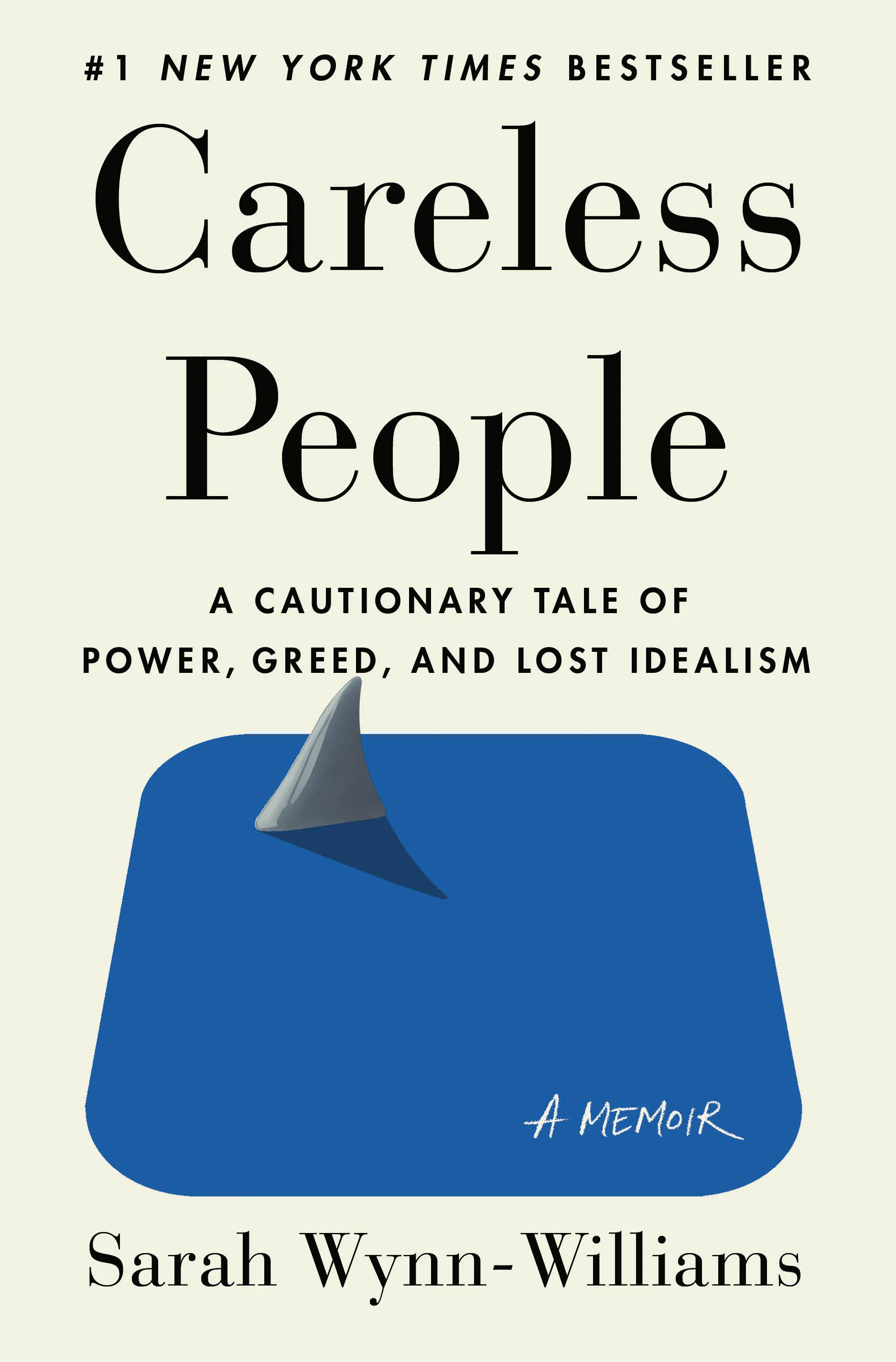
I grew up in a family of four kids. The eldest. The responsible one. My childhood was pretty normal, I guess, except for the time I was attacked by a shark.
I was thirteen when this happened. We were on vacation at a beach where my family camped every year. I’m standing in the water with a friend. I don’t see it. I feel it. A force so powerful and unexpected. A shark attack is like being hit by a knife attached to a freight train. I’ve never been on the receiving end of such searing pain as its teeth go deeper and deeper.
It locks its mouth around my torso, just above my waist on my right side. It feels like it’s trying to get inside me, pushing deeper, trying to rip my stomach, that chunk of me, away. I’m trapped. It starts shaking me the way a dog shakes a toy, back and forth, trying to force me under the water. I go under once and struggle to my feet, then a second time and a third. This third time I start to take in ocean water and the thought occurs to me, “Oh, it’s trying to drown me. I could drown.” Like, I thought in a shark attack you die from the attack, but now there’s a whole new way to die I hadn’t realized. I’m in its mouth, clenched between its teeth, under the water. I need air desperately.
My animal instincts kick in. I’m scratching, kicking, punching, pulling, doing whatever I physically can to escape. It’s like hand-to-hand combat. I fight with everything I have to try to get my head above the surface.
Whatever I did, it is enough to give the shark a fright. It lets go and swims away.
I struggle toward the shore and send my friend for help. My swimsuit is tattered. I look down and see two big puncture wounds and a chunk of skin missing. Gone. There’s blood pouring out. I’m worried that’s going to bring the shark back or maybe some other sharks so I stumble through the water as fast as I can. But once I get to shallow water, I collapse and lie there alone, feeling the blood oozing out of me, the sting of the salt water, the hole in my body.
I don’t know how long I’ve been there when some fishermen come along.
“Are you all right?”
I’m patently not all right. But the other issue is that I’m exposed; the shark has ripped off enough of my swimsuit that I’m quite naked. I’m also thirteen. So I try to tell them I’m fine, just hoping they’ll go away. They’re like, “Um, you don’t look fine.” And I’m all, “I’m okay. I’ll figure it out, you carry on.” Maybe it’s the blood, or the shreds of swimsuit but they don’t buy it. “We’ll get you out of the water.” And I’m still telling them I’m fine when at a certain point they just stop negotiating, pick up my seminaked body and carry me up to the shoreline. I am dying of shame. Absolutely dying of shame. On the beach a small crowd starts to form, to my horror. My parents arrive and lift me into the back of our family car. The beach is in a remote part of New Zealand and there’s no hospital nearby. We set off to the closest town, a twenty-minute drive away.
There’s no hospital in the town, so we have to call the local doctor to open up his medical office, which is a small, single-story building. Once we get there everyone seems relieved, like the crisis has passed. It’s almost jovial as my dad and the doctor discuss the cricket and plans for the weekend. My dad cheerfully explains that yesterday we’d tried to refloat whales that had stranded on a beach nearby, that I had been in charge of two small whales we’d nicknamed Moby and Maybe, not knowing if the smaller one would make it. No one is in a hurry. No one asks me what happened. The doctor cleans the wound, pulls the skin around the jaw marks together, and stitches it up so there’s no longer a chunk missing. He gives me a tetanus shot and warns my parents that I might be a little dramatic that night because I might be in shock but I’d be fine. I obviously was a fighter. Everyone laughs.
We return to the campground. I’m allowed to stay in the camper rather than head under the attached awning with my three siblings because I’m in pain, which the doctor had told me and my parents to expect, some mild pain from the stitches. Very quickly I realize this pain is not mild. It’s searing. I start vomiting up blood and these thick, dark, sticky clots that look like coffee grounds, which I assume is stomach lining but I know nothing about the human body. I pull out a large red plastic cup to collect it so I don’t get the camper dirty.
Everyone else goes to bed but I can’t sleep. It keeps getting worse and worse. I feel like I’m on fire. I wait, quiet as possible so I don’t wake anyone. After a while, the red cup is full and I’m onto another. The pain is excruciating.
Eventually I wake my parents.
“I’m on fire. I’m burning up inside.”
“Go back to sleep. You’ll be fine.”
This continues throughout the night: I wake my parents, they tell me that the doctor said I’d be fine. We’ll all learn later what actually is happening. The shark had bitten through my bowel in several places, so it’s like I’ve been stabbed multiple times. The blood and the contents of my bowel are leaking into my gut, basically poisoning me. I have sepsis, acute peritonitis. Eventually there is so much of this toxic blood liquid that it floods through my body and flows into my lungs, making it increasingly difficult to breathe. Like I’m suffocating.
I wake my parents again.
“I can’t breathe. I can’t breathe. I can’t get the air in.”
My mother—tired of being woken—responds in an authoritative voice, “Mind over matter. Stop that hyperventilating.” This has become a family joke. Now anytime one of us mentions anything, a cold or a cut or appendicitis, we respond, “Mind over matter. Stop that hyperventilating.”
We later learn that my left lung has collapsed from a pulmonary edema. And my right lung is damaged.
By morning, I realize I’m losing my ability to keep going.
I wake my parents one more time and say:
“I’m dying.”
But I cannot convince them. And my life depends on convincing them. I have no Plan B. I can’t drive. I don’t have my own phone. This is 1993.
The next morning, after my family wakes and starts getting breakfast, I’m barely getting in enough air to breathe. Then my eyes roll into the back of my head. My mother told me later that when she saw the whites of my eyes, she felt like she was falling through the surface of the earth. Now she believes me. And wants to rush me to the doctor.
Problem is, my dad’s MIA. Utterly unworried about how badly I’m doing, he’s taken the car to show fishermen the scraps of my swimsuit, hoping they can identify the type of shark and, I suspect, secretly hoping that they’ll go hunting for it.
When he returns, we get in the car. By now, with one collapsed lung and fluid rapidly accumulating in the other, it’s taking all my concentration to keep enough air going in and out. I’m lying prone in the back seat of the car, and as we make our way toward town, for the first time I start to doubt whether I can keep doing what I’ve been doing to keep myself alive.
My dad, meanwhile, seems not to be rushing at all. He’s a keen fisherman. I swear that when we cross any bridge, I can feel the car slow down while he scans the river for fish, like he always does. From the back seat my mother tells him to hurry.
Eventually we get stuck behind a farmer who’s moving his sheep across a short bridge, which is a regular New Zealand thing. I hadn’t factored this into my estimate of “this is how long I have to keep myself going until I reach help” and now I completely lose it. I start to lose consciousness. It’s like lifting off in an airplane. It feels good, weightless and painless. Floating into unconsciousness where there’s no suffering. But I fight it. I think, “I’ve got to get back.”
We finally get to town. Back at the same medical office with the doctor who told my parents I’d be fine. By now I can’t speak, can’t move, and I’m drifting in and out of consciousness. My dad carries me inside and the doctor from the day before approaches us. Not this guy, I think, as I’m hoisted onto a table. He and two other doctors crowd around to examine me, poking me this way and that, and then they leave abruptly to talk to my parents off in the corner. I hear one of them say something that I can’t quite make out but sounds like “she’s dying” or “she’s dead.”
My dad howls, “She was my favorite daughter.” I enjoy that for a moment. I have two sisters. I can’t wait to tell them. I’d always suspected it. Then my mother wails, “Just like the cat!” Because our cat Winkels had recently met an untimely end. Just like the cat. Brutal.
After this my dad gets very angry, yelling at the doctors to do something, to find out what had gone wrong.
Next thing I know, the doctor comes back. Gets out a very large blade like a mini ax and starts thwacking it down, carving into my left arm. Then my right arm. It’s like I’m a piece of meat being hacked open. No anesthesia. No warning. And I’m beyond the point where I have any control over my own body. I can’t move or speak. I can’t raise any alarm.
I’d thought the shark attack was more pain than a person can bear, the worst that could happen. I was wrong.
The doctor repositions himself near my ankle and brings the blade down with force, splitting the skin and plunging the blade to the bone. Why is the doctor hacking open my ankles? The only explanation I can muster is that he thinks I’m already dead. I’m experiencing my own autopsy. The mortal terror I felt during the shark attack returns, that feeling like, I could die right this second. Painfully. Hacked to death. Is it weirder to die from a shark attack or an autopsy? Will they even know they killed me? The fear chokes me as I anticipate the next ax strike across my neck or skull or some other vulnerable part of me, delivering the final blow.
Copyright © 2025 by Sarah Wynn-Williams