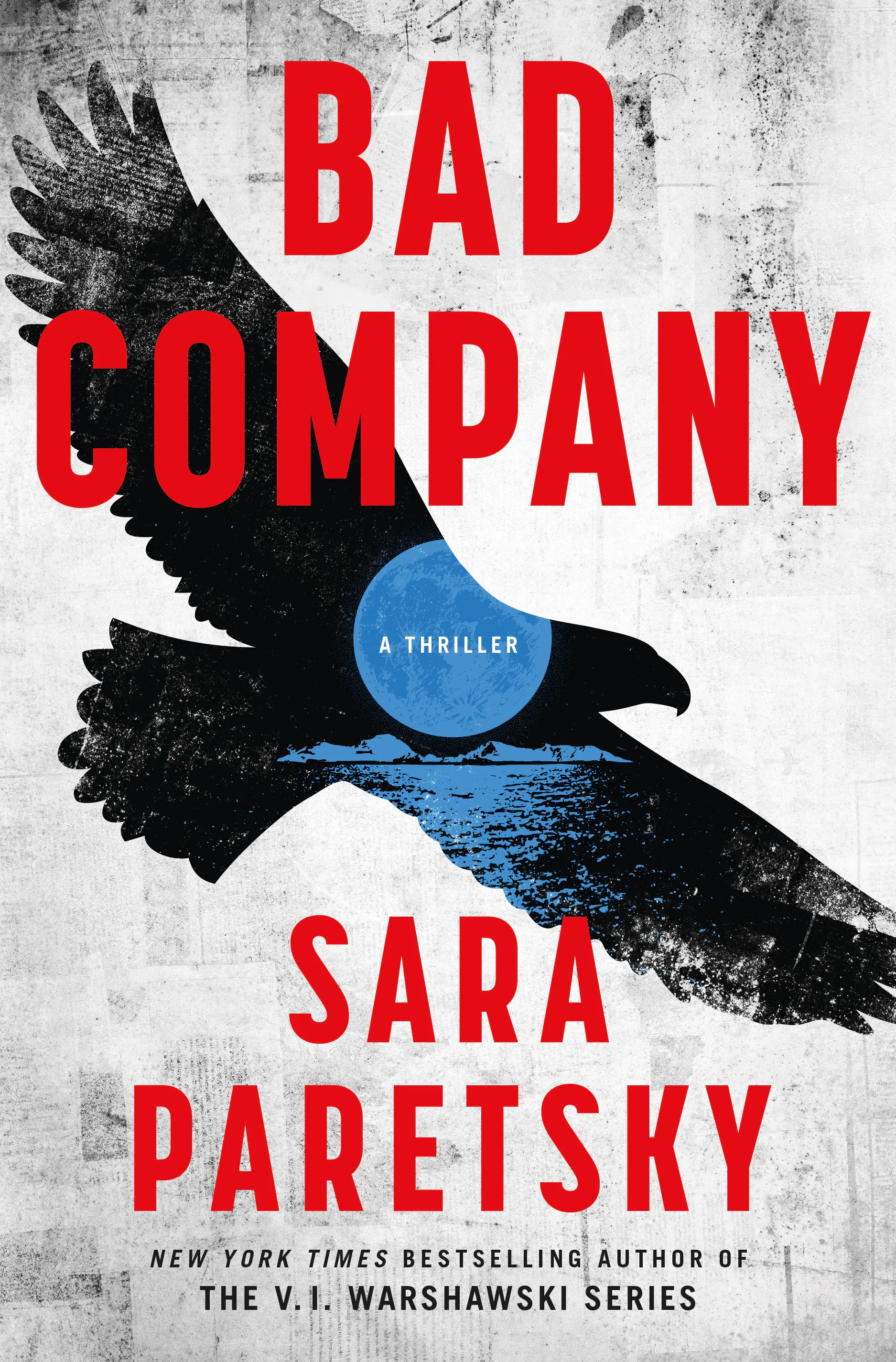
1NIGHT IN THE PARK
The SUV was traveling so fast it bounced when the driver stood on the brakes. Black, big, eight-seater with a grille between the front and rear seats. The grille signaled law enforcement. No logos on the door panels meant federal.
The people living in the park who saw it arrive retreated behind the shrubbery. Everyone knew someone who’d been picked up for sleeping on the streets.
“But where are we supposed to sleep if we can’t afford a room?” Myra had demanded of Elwyn and Joel.
The three traveled, not exactly together, but in an orbit, keeping an eye on one another. Tonight, they watched as two men in sports jackets jumped from the SUV and marched quick-time into the Keeler Arms. That was a grand name for a broken-down building that rented rooms by the day. Keeler Armless, the locals called it.
“Got to be cops,” Elwyn said. “They come to make an arrest, maybe the manager, seen him bringing teenage girls in.”
“That isn’t a cop car,” Myra said. “Too fancy for a cop. Maybe it’s a mob hit.”
“Mob hit?” Joel was scornful. “No mobster would be caught dead in a fleabag like the Armless.”
None of them said, if they could have afforded a fleabag like the tired building on the corner, they’d have been sleeping there instead of squirming on benches in the park across the street, trying to find a place where the slats didn’t cut deep into the shoulder blades, where rats didn’t crawl around their food, and where trees didn’t drop branches on their heads.
“Hey, look!” Myra pointed at the back of the building. A third-floor window had opened. A rope snaked out, and then a woman, Myra was pretty sure it was a woman, lowered herself, hand under hand. She got to the end of the rope but was still a good ten feet from the ground.
She looked around, swung wildly, and dropped, landing hard on her left hip. She got to her feet, pressing a hand against her hip, and hobbled across the street into the park. She sat heavily on the first bench she came to.
“Hey, you!” Myra cried. “That’s my bench, that’s my stuff, you can’t sit here. That why the cops are chasing you? ’Cause you’re a thief?”
Elwyn said, “Don’t be a hard-ass, Myra. Lady just fell out of that window over there. We were all watching. Let her rest a minute.”
“I’m not a soldier in your army, Elwyn. You’re not the boss of me; I’ve told you that a hundred million times.” Myra snatched a dirty Gucci purse from one of her trash bags and clutched it to her chest.
The woman who’d fallen rubbed her hip again. “Sorry,” she muttered. “I need to catch my breath. I’ll move on in a second.”
“Why’d you go out the window?” Joel said. “Your room on fire?”
“Someone was breaking my door down,” the woman said. “I was scared.”
“What were they doing that for?” Joel asked. “You owe a bookie? Is that who’s driving that Lexus?” He pointed at the late-model SUV, flashers winking, in front of the Armless.
“She’s a fugitive, Joel,” Elwyn said. “That’s an unmarked car. U.S marshals are after her.”
“Is someone really after you?” Myra asked as the fallen woman got to her feet. “Is it like Joel said? You owe money to a bookie?”
“Do I look like someone with a bookie?” She gave a laugh that sounded like a seal’s bark. She was wearing clothes as shabby as Myra’s, although not as many layers of them. She carried a worn backpack instead of a garbage bag, but she was obviously only a step away from the streets herself.
“So why are they after you? Is it the law?” Elwyn persisted.
“My ex,” the woman said after a pause, her eyes on the building across the street. “He’s an ex because of his gambling, and since they can’t get blood from one turnip, they’re trying to see what happens when they squeeze both of us.”
“That’s harsh,” Joel said.
He held out his bottle, offering a pull. The woman tilted her head back, bottle to her lips, but didn’t swallow. Even if Joel’s rotgut hadn’t tasted like turpentine, she couldn’t afford to numb her mind.
“Hey, they found where you jumped,” Elwyn cried.
The others followed his pointing finger. The two men who’d driven up in the Lexus were peering at the rope hanging from the window.
Myra and Joel went to the edge of the trees to see what the pair would do. Myra giggled. It was like a scene from a 1920s silent movie, the two men looking at the rope, at the ground, at each other, and then vanishing from the scene.
The duo reappeared a few minutes later, charging through the fleabag’s front door. They still looked like Keystone Cops to Myra: they darted around to the side of the building and inspected the ground near the dangling rope. No old woman. All they needed was to lift the powerful flashlights they carried and hit each other over the head.
Instead, they shone their lights up and down the street, trying to decide which way to go. One pointed at the park, the other nodded. Myra and Joel retreated into the cover of the trees as the bookies or mobsters or whoever they were ran into the road, so intent on their search that they didn’t see a boy on a skateboard in their path. They knocked him to the ground.
His skateboard flipped out from under him into the path of an oncoming car.
“Watch where you’re going, assholes,” the boy bleated. “You just wrecked my board.”
The two men ignored him. They were pointing their powerful flashlights at Myra and Joel, who were scrambling to settle onto their regular benches. Like other rough sleepers, the pair pulled blankets from the plastic bags that held their possessions, used other bags filled with boots or food as pillows.
Everyone in the park was waiting tensely for what the men with the flashlights would do. They marched first to Myra, shone the light straight at her eyes. When she whimpered in a faint protest, one of them stuck a hand inside her layer of sweaters and tugged at skin on the back of her neck.
Myra cried out and tried to bat his hand away.
“It isn’t her,” he said to his companion. “At least this creature’s ugly face is her own.”
The second man shook Elwyn’s shoulder. “Wake up, loser. Have you seen this woman?” He held his tablet in Elwyn’s face. The screen showed a young woman with a long red-gold braid, laughing, head tilted back. Her face dissolved into that of an old woman, one with short white hair, face wrinkled.
Elwyn blinked, squinted. “Is that an actress?”
Joel stumbled over to look. “Is that the woman who jumped out of the window? She’s an actress?”
“An actress?” Myra sat up. “Is she famous? What did she star in?”
“Actress?” the man with the tablet said. “Yeah, you could say her whole life is one big act. She starred in betraying her country. Was she here in the park just now?”
“Betraying her country?” Myra repeated. “I don’t know that show. What’s her name? Was she in Survivor?”
“She’s not a fucking actress!” the man shouted. “She’s a traitor. We’re looking for her.”
“You said she had a big act,” Elwyn said stubbornly. “Now you say she didn’t. Sounds like you don’t even know who you’re looking for.”
“Listen, dirtbag. The woman who jumped out of that window is a traitor. We are with the FBI. We are trying to find her. Did she come into the park?”
“You can’t come around calling people ‘dirtbags,’ or ‘creatures.’ We’re human, same as you. And what do you care about the woman in the window? Why don’t you leave her alone? You drive a fancy car and she’s living in a cheap SRO. You don’t need her money!”
“I don’t want her money.” The man seemed to grind his teeth in the dark. “I’m a federal agent. She’s wanted for endangering our national security, which, by the way, keeps people like you secure when you want to sleep on the streets.”
“Federal agent?” Joel snickered. “Good one. Federal agents shake down homeless people all the time looking for traitors because they figure traitors make so much money selling secrets they want to live on park benches. Hey, Elwyn, you commit any treason lately? I did, I pretended I was dead broke and got a lady on Hutchinson Place to give me a ten when I already had five in my pocket. Was that treason or just lying?”
“Did you see Lily tonight or didn’t you?” the second man smacked his flashlight against his palm hard enough to produce a loud thwack. Elwyn and Joel seemed to shrink. No violence, please, no violence.
“Don’t you have to show a badge, if you’re really a federal agent?” Myra demanded.
“Not to losers like you. Which way she go?” the second man demanded.
Joel shook his head. “We didn’t know she was a traitor; we didn’t even know her name is Lily. Besides, there aren’t any signs on the light poles, the kind they put up, you know, ‘Watch out for this old lady, she could be armed and dangerous once her hip gets better.’ So, we didn’t watch which way she went.”
The two men went through the encampment, shining their lights on all the people they could find, pinching some at the base of their necks the way they had Myra, and ignoring protests as they’d ignored hers. They even shone their lights up at low-hanging branches, “Like they think she’s escaped from the zoo,” Elwyn muttered.
* * *
The boy with the skateboard lay where he’d fallen, near the curb on a deserted stretch of Keeler Avenue. The few cars that passed ignored him.
When he heard the two men arguing with the people on the park benches, the boy pushed himself standing, inch by inch, checking his bones: the sidewalk took a toll. He moved cautiously into the road to collect his board, but all that remained of it was the wheelbase and some splinters.
He tucked a splinter up the sleeve of his windbreaker and shuffled along the sidewalk, heading to the front of the apartment building where the SUV stood, flashers still pulsing, showing the liquor store across the street, the three boarded-up storefronts next to it.
A small crowd had gathered to watch the two suits, some from inside the building, others who’d been lounging in the park. Live entertainment, way better than the dreary thoughts that ground away their minds.
When the boy went up to the SUV, some on the street corner turned to look at him, but his face in the flashing lights was so disfigured by acne that they looked away again. The boy hunched deep inside his windbreaker, hiding his face in the collar.
None of them saw the boy slip a key fob from a pocket and press the button in its center. On the fifth try, the SUV locks snapped open. The boy sat in the driver’s seat; head still hunched into his collar. He looked in the glove compartment and center console. The only thing he found besides antacids was the registration and proof of insurance. The Lexus was registered to the FBI, but that wasn’t exactly a news bulletin.
He slipped out of the car, but when he’d locked it, he took the splinter of skateboard and gouged the paint underneath the door handle.
“What are you doing, you little creep?” The two men had been walking back up the street, but when they saw the boy near the driver’s door, they sprinted over to him.
“You fucking vandalized my car. You’ll pay for this!” the taller man cried.
He grabbed at the boy’s windbreaker, but the youth ducked under his arm and darted into the street.
“You trashed my ride, I’m paying back the favor,” he squawked. His voice moved in that embarrassing adolescent space between treble and baritone.
The man grabbed at him again, but one of the onlookers yelled, “Leave him alone.”
“Yeah,” someone else called. “You think you’re tough beating up kids and drunks? You want to show you can fight, come over here and pick on me.”
This got a round of applause and more threats.
A northbound bus was pulling up at the stop across the street. While the suits backed away from the jeering crowd on the corner, the boy boarded the bus through the rear door.
The driver bellowed at him to get off—he was tired of punk kids riding for nothing. The boy left at the next stop, head still hunched deep into his jacket, hiding his acne. The bus shelter was empty, but he walked past it into the cover of an unlit storefront.
He pushed his hands inside the back of the windbreaker, to the same spot where feds had pinched Myra’s neck. He found the edge of a thin silicone mask and rolled it up, catching his baseball cap as it fell. With the same motion he slid out of the windbreaker and reversed it, holding mask and cap under what was now a shiny black rain jacket.
When a southbound bus pulled up, a seventy-something woman, face lined and weary under a tangle of white hair, showed her senior citizen pass. The whole switch had taken forty-three seconds, almost double what it used to. She was pretty sure no one had seen her, but she needed to change her route a few more times to be sure.
It was at a stop on Belmont Avenue that her luck ran out.
2LETTER FROM TS’GALI
That was Lily, on the run from the FBI. Her flight had actually begun months earlier, on an ordinary day in her dull retirement life. She’d been at an orthopedist’s office for an appointment that had taken four months to schedule. The appointment had been for two fifteen. At three, she’d gone up to check with the receptionist.
“Doctor is tied up with other patients. You’ll get your turn.” The woman barely glanced at Lily.
“Maybe you could start the process? Get me a form for PT so that if Doctor can’t see me today, I can at least start getting treatment?”
The woman’s face swelled with anger. “I don’t bend rules for you or anyone. If your time is more valuable than Doctor’s, make an appointment for another day.”
Lily debated escalation. Not worth it. The receptionist was like a woman in Kashmir she’d wasted eight months wooing. What had her name been? Rabia something.
She was tempted to reschedule, but it had been difficult to find this doctor, get this appointment. She’d been ignoring her shoulder pain far too long. If she stomped off, she’d be the only loser.
Anyway, why was she fighting a receptionist? She used to be more patient. She’d wait months for a potential asset to decide whether to make that first leap into working for America. She’d wait hours for drops, hiding in caves or forests even during blizzards or skin-cracking heat.
She knew it was retirement that was making her edgy. For forty years she’d had an active career in some of the world’s most dangerous countries. Since retiring, she couldn’t find enough to do. She also didn’t feel connected to the United States, where she hadn’t lived since she was twenty-two.
When Langley made it abundantly clear that they wanted Lily to quit, she’d gone to Chicago to visit her mother, whom she also scarcely knew. Her mother had abandoned her when she was eight, but she was ninety-one now and lonely. Her two sons from her second marriage didn’t want her, so she begged Lily to move in for a longer stay.
Lily had been debating a move to the West Coast when her mother suddenly died, unexpectedly leaving Lily the condo and a piece of her substantial portfolio. At first, Lily thought she’d sell the condo and move to the Rockies or the Sierra Madres: she’d spent the bulk of her career in the mountains of Asia and missed them in Chicago’s flat landscape. An exploratory trip showed her that a place in California or Colorado would cost more than she’d get if she sold the condo. Besides, she’d moved seventeen times in her forty years with Uncle Sam. She was tired of packing and unpacking.
She stayed in Chicago. It took time to find her way around the strange city in the unfamiliar country. Her sore shoulder grew worse and so she finally found this orthopedic specialist.
One thing she thought she’d never get used to in America was television screens in every waiting space, including hospitals and doctors’ offices. The one in the orthopedist’s waiting room was tuned to an especially annoying talk show. No one was watching. Everyone in the waiting room was hunched over their devices, or looking fixedly at something no one else could see.
While Lily waited, she’d been translating English texts into Russian for some high school students she was tutoring. After her altercation with the receptionist, there wasn’t anything else on her tablet to occupy her.
She turned to her mail. It had arrived as she was leaving home for the doctor, so she’d stuffed it all into her handbag. She pulled it out now and quickly riffled through the usual selection of junk. The one unexpected piece was a padded mailer, no return address, postmarked Dallas.
It held a two-month-old copy of The New Yorker, with a typed unsigned note stapled to the cover: You need to read this.
She looked at it, bewildered. She’d never cared much for The New Yorker. It was too smugly right about politics, or maybe too smugly left. Too knowing about music, dance, theater, too full of cute vignettes about Important People. When she’d attended dinners at European embassies, the diplomats would rave about the magazine—they felt it made America seem more like their own worlds.
Lily would scoff at them. She’d grown up in a small town outside Detroit, nothing like London or Paris, but America, nonetheless. “You should talk to the people who build your cars for you, or who put their lives on the line time and again, and never get any public thanks,” she would say, thinking of her own family, her own career, and of friends she’d lost to bombs or torture.
The note had been stapled in a way to ensure she opened it at the centerfold. “Letter from Ts’gali” jumped out at her.
She stared, dumbfounded. Ts’gali was the capital of Hayalistan. That had been her first assignment as a field agent, and the place she’d served the longest. Of all the places she’d worked, that was the only country that had felt like home.
When she first arrived there, the country, like all the Stans, was a republic in the Soviet Union. She’d served long enough to witness the fall of the USSR, the rise of Al Qaeda, Hayalistan’s efforts to build a government independent of Russian control.
Hayalistan was a geopolitical pivot point. It lay on the route between Russia and Afghanistan and shared seventy kilometers with Iran’s northern border. Iranian threats, Al Qaeda cells, drug cartels, mining companies eager to possess Mount Muqqadas’s riches, kept agents from every intelligence service on their toes.
Lily had been assigned there initially because of her impeccable Russian, which had been the official language of all the Soviet Republics. She’d embraced the country, the people, the great mountain that shadowed over their lives, and she’d mastered Hayali. That mastery turned into one of the dozens of grievances the Hayali station director had nursed against Lily: she was the only CIA employee who spoke Hayali. No one could double-check her version of local chatter; she could easily be undermining U.S. interests.
Bruce Weyrich kept sending complaints to his immediate boss, Jason Tedros, but he also violated protocol by writing to U.S. senators and business leaders who shared his view of women as field agents.
Tedros hadn’t been likely to act on Bruce’s complaints, because he had recruited Lily. He’d been head of Ankara station then. Lily had been bumming around Europe, teaching English in different countries, picking up local languages along the way.
Russian was her first language after English, but that was because she’d grown up speaking it. Her Russian grandmother—her mother’s mother—her babulya—lived with Lily and her father. After Lily’s mother fled to Chicago with an art teacher, Babulya Katerina folded Lily in her arms. Babulya assured Lily that she was safe, well-loved, and that it was not Lily’s fault her mother had run away.
Babulya herself had grown up in Russia, her life scarred by the Revolution and years of near starvation. With millions of others, she had moved across the countryside looking for food. Unlike most, she wriggled through the Belarus border. From there she found her way to a port city and an America-bound ship. She ended up in Detroit, pregnant with Lily’s mother, looking for the baby’s father, who’d claimed to be a Buick engineer. She raised Lily’s mother on her own.
Lily grew up with a wanderlust her grandmother couldn’t understand. Every time Lily wrote her from a new country, Babulya would beg her to come home, settle down, avoid revolutions, famines, and especially lying, cheating men.
When she crossed paths with Jason Tedros, he watched her for months before approaching her to make sure she wasn’t a Russian agent. It wasn’t just her languages that made her a potential agent, but her way of listening to people, getting them to reveal more than they intended because of her interest in their stories.
Lily became one of his best recruits. He moved her from Hayalistan to Delhi, Kashmir, and on to a dozen other posts in Asia. She’d ended in Mongolia, but none of these other countries ever appeared in her happy dreams. In these, she was swimming naked in Lake Sakin’s glacier waters.
In fact, a two-page photo of Lake Sakin filled The New Yorker centerfold. The Ts’gali region of Hayalistan was dotted with lakes, but Sakin was the most important. Fed by water from the streams pouring down Mount Muqqadas, Sakin stretched some hundred miles from the capital to the farmlands in the east.
When Lily had been stationed in Hayalistan, she’d spent a lot of time in and around the lake. The water was as clean and clear as the mountain sky. In summers, she joined the local women at the base of one of the streams, scrubbing clothes on the rocks on laundry day.
She’d also bathed with Hayali women in one of Sakin’s sheltered coves, swimming under the full moon, participating in the ceremonial presentation of a day’s flow to the lake spirit. Hayalistan was a Muslim country, but ancient beliefs, ancient practices, survived both Islam and Communism.
Swimming in the summer, watching the full moon appearing over Mount Muqqadas, she’d never experienced a deeper joy. Even women as old as she was today, long past their time of bleeding, took part in the ceremony. She’d never been part of a female community like that, one where the bonds went so deep. When she was transferred to Delhi, that community was what she missed most, at least as much as Rani.
Lily had used her connections from the moon ritual to build a strong intelligence network. Women married to important men who beat them, women clerks saving their bosses’ butts, underpaid nannies in wealthy homes, they all shared secrets with the American who learned their language and listened empathically to their troubles.
In the doctor’s waiting room, with the magazine open in her lap, Lily didn’t think about the times she’d scooped the British or the French or the men on her own team who belittled her. What came to her was the first time she’d seen Rani. It was during Hayalistan’s brief summer, when the clans built great bonfires on the outskirts of the capital. Men and women in traditional dress chanted the country’s epic poems. There were contests over who could remember the most verses.
Rani, as imperious as the eagle he carried on his forearm, won for chanting “The Hunter and the Eagle” all the way to its poignant ending. He laughed at the applause; teeth white in the darkness. At later bonfires he would pull Lily, the pale American, from the cheering crowd, to dance with him.
Anta was always somewhere in the background, her anger like a force field that pushed the crowd from her side.
Lily thumbed through The New Yorker pages, studying photos in the hope she’d see a face she knew—in fact, hoping to see Rani. Instead, she came upon herself, blurred but unmistakable.
She was in Lake Sakin with twenty or more Hayali women. They all were dark-skinned, with straight black hair. Under the silver moonlight, her pale breasts and long red-gold braid were instantly recognizable.
The ceremony was sacred, not open to the male gaze, nor to photographers. The women performed their rites inside a shallow cave so that rocks screened them from view both overhead and around the sides. After the chanting and the offering, they would swim within the cove. They weren’t visible from the land. In that pre-drone era, the photographer must have crossed the lake by canoe and silently watched them.
Everyone who took part was sworn to secrecy. Even while Lily built intelligence connections among the women, she never betrayed their private lives. And yet, here she was, naked in a photo in a magazine seen by tens of millions of people all over the world. Not too recognizable today, with her long braid replaced by coarse white curls, but still, her privacy violated along with all the women of Hayalistan.
And then she read the sidebar.
As protests build over foreign ownership of land and resources, the U.S. comes in for the heaviest criticism, even though Russia and China have been players in Hayalistan for centuries. Some point to the American pictured in the lake. Locals say she infiltrated private ceremonies on behalf of U.S. companies, giving America access to Hayali decision makers other countries didn’t know about.
A red mist rose between Lily and the page. She didn’t hear the receptionist calling her name. It wasn’t until the woman was standing above her, saying, “You wanted this appointment. Are you keeping it or not?” that Lily came back to the present.
She stuck the magazine into her handbag and stood so quickly her head bumped the other woman’s breasts. She left the room without speaking, ignoring the receptionist’s demand for an apology, and ran to the exit, her sore shoulder forgotten.
3SO SECRET YOU’D BE BORED TO DEATH
Lily usually got around Chicago by bus or L, but she was so angry when she left the doctor’s office that she flagged a taxi. When she got home, she jumped out, wanting to run inside and rip apart the story, the writer, the magazine itself.
Instead, August McBride, the doorman at Lily’s building, waylaid her. He gestured to the curb. A teenaged girl was sitting there, her hair a mass of uncombed black curls. She was wearing a man’s checked shirt, haphazardly snapped, over baggy jeans.
“She showed up about a half hour ago. I told her you couldn’t talk to her, but she wouldn’t leave.”
Before Lily could react, the girl got to her feet and lumbered up the walk. “You said to talk to you if I didn’t get a role and you’d help me be part of the show. Well, I didn’t get a role, but you didn’t even bother to show up. You pretend me and the other kids are important, but when you get down to it, you don’t give a shit.”
Adolescent rage. Lily was never in the mood for it, but especially not this afternoon when she had her own narcissistic wounds to tend to. She kept her voice steady with an effort.
“We talked about this two weeks ago, Keira. What did I tell you then?”
Keira’s scowl deepened. “To talk to you if I didn’t get—”
“Yes, that. But what did I advise you about your approach to an audition? Did I say, swear at me and the director, tell us we don’t care about the students? Did I say, put on your oldest sloppiest clothes so we have to guess whether you care about the show?”
Keira drew a circle on the walk with the toe of her boot. “I guess not,” she muttered, but then said loudly, “I told Renee I’m not like Isabella or Mindy. Of course, they got the Witch and the Baker’s Wife, their moms started grooming them to be stars when they were, like, two. Well, I never had those classes.”
Renee Skinner ran the after-school theater program where Lily volunteered.
“This is what I tried talking to you about two weeks ago,” Lily said. “You show up with a six-foot-high chip on your shoulder, and the directors will say, ‘Girl with that attitude, she’s going to be hell on the set.’ So even if you could sing and dance Mindy into a blubbering heap on the stage floor, they wouldn’t take you on.”
Keira brushed away tears with an angry hand. “So does that mean you won’t let me be part of the show?”
“I said I would help you, and I will. You know I work with makeup and special effects, not with casting or directing, and that’s where I can find a spot for you. But that offer depends on you not fighting with me or other people in the group. That isn’t going to happen tonight. For now—I’ve just come from the doctor. I’m tired, I need to lie down.”
Keira’s face shifted from sullen to alarmed. “Are you—did they tell you—is it cancer?”
“Nothing life-threatening. I injured my shoulder in my last job. It leaves me tired. I hoped the doctor could fix it but, in the end, I wasn’t able to see him.”
Fieldwork took a fair amount of acting ability, taking on different personae to make yourself sympathetic to potential assets. It sometimes involved makeup or silicone masks so you could change your appearance, often while sliding into an alcove for twelve seconds. Lily had connections with the Hollywood special effects team that had outfitted her and other agents. She’d kept in touch with them when she retired. The Hermes Studios in particular were willing to donate supplies to the drama program.
A certain glamour clung to Lily because she knew Hollywood people. A number of the students wanted her attention and support, not just Keira. Most, including Keira’s bêtes noires Isabella and Mindy, dealt with poverty or homes with drugs, or missing or abusive parents, but none were as hard to work with as Keira.
Renee wanted to ban Keira from the program after she’d punched Mindy. She hadn’t heard Mindy and Isabella’s whispered chant, “Your mom’s a skag, she’ll sell you for a bag,” but Lily had.
She persuaded Renee to give Keira another chance, but she took Keira away that afternoon, tried to give her some coaching on handling girls like Mindy. After that, Keira attached herself to Lily. There came a time when Keira was picked up in River Park for a curfew violation.
At one in the morning, when Keira’s mother still wasn’t answering her phone, Keira called Lily, who signed her out and brought her back to her own building while she tried to reach the mother.
“I don’t want to go home,” Keira said. “She has a gross boyfriend, he corners me and—anyway, what if he’s there now? That could be why she isn’t answering, because she’s so wasted.”
Lily asked after other relatives. Nana had died, Auntie Jackie lived in Bismarck, North Dakota, where Mom grew up, but the two fought all the time.
Lily let Keira crash on her living room couch. She called the mother, but first thing in the morning the mother’s speech was already slurred.
“You know your boyfriend, or dealer, whoever he is, tried to rape your daughter?”
“She says. Little bitch would say anything—”
“Little bitch is fifteen, she needs your support. I’m a volunteer with the Chicago Public School System and have a legal responsibility for students. I’m reporting you to the Child Abuse and Neglect hotline.”
Health and Human Services, the parent agency, sent an investigator. They threatened Keira’s mother with arrest if her lover or dealer or anyone else assaulted her daughter, and at least for a few weeks, the girl’s home life calmed down.
Lily didn’t want Keira to be her full-time project, but she did keep an eye on her at the theater workshop and took her out for bubble tea now and then, just to let her know someone was watching.
Tonight, though, with her shoulder throbbing, and her anger roused by the New Yorker story, she couldn’t pay attention to Keira’s woes. She gave her a push toward the street, but added, “You go on home, and for pity’s sake, don’t get arrested. I’m too beat to bail you out.”
Keira started to scowl again, then realized Lily was half-teasing her and left, still slouching but not frowning.
August McBride had listened to the whole exchange. “Why do you encourage a girl like her, Lily? You never should have brought her here. She’ll tell her loser friends, and they’ll come around, figuring you’re an easy mark to scam, or even beat up.”
“Thanks for the warning, August. If any of them try to break in, let me know. I’ll pull out my old badge and let them think I can arrest them.”
“Can you?”
“Nope. You know I was with the CIA. We don’t have any arrest powers, anywhere in the world.”
“Secret agent?”
She dredged up a grin. “So secret I can’t tell you what I did.”
“If you did, you’d have to kill me. We all know that line.”
“The truth is, if I started telling you, you’d die of boredom before I finished listing the museum shows, horse races, dances, village craft fairs, poetry contests that I had to attend. After more than forty years, it adds up to about eight thousand.”
Her day job, her cover, had been as a cultural attaché. Like most field agents, she did her cover job on top of her fieldwork. Like the best field agents, she’d blended both roles, but she’d still worked a lot of eighty-hour weeks.
August held the door for her, and gave her a sympathetic pat. “You’re a hardworking lady. You deserve to take it easy in retirement, not look after losers like Keira. I know you bailed her out that time—I was on duty when you brought her back from the lockup, remember? I know how she talked to you that night.”
“She’s fifteen,” Lily said. “At that age, she gets a break to see if she wants to be a punk or a person, although I agree that she puts the punk side forward too much of the time.”
4ROLLED INTO RETIREMENT
Lily usually walked the five flights up to her condo, but Keira’s anger, her own anger over the magazine story on top of her bad shoulder, had worn her out. She rode the elevator, trying to work on her breathing, her posture, all those things you’re supposed to do to keep your blood pressure and spirits under control.
Her shoulder was a constant reminder that she’d had to retire before she wanted to. Her last assignment had been in Ulaanbaatar, Mongolia. The CIA was watching assets there disappear into torture chambers and death camps at an alarming rate. Lily was brought in to drill the local team in evasion techniques.
After two training runs with a young colleague, she’d had him drive her on a live roll-out drop. For roll outs, you’re in a car, traveling a route that you’ve used enough times that your watchers aren’t paying close attention. You have a short window, under fifteen seconds, where the route is away from all surveillance. Your driver slows, you slide out from the passenger side and roll across the road to the drop point. In this case, Lily was supposed to leave a camera concealed inside a soiled newspaper. Later, their Mongolian asset would collect it when he, too, was free from surveillance.
The op takes perfect timing. When it goes well, your car moves on without stopping. You take care of the drop and find your way back to base on your own.
That last day, the operation was not smooth. Lily’s partner accelerated as she was leaving the car. She was flung to the ground. She managed to protect her head but landed on her left shoulder. The damage never healed completely.
The station chief, who was half her age, refused to believe the driver had accelerated. He said Lily’s timing and judgment were off; time for her to take a desk job at Langley. She protested up her chain of command to no avail. Everyone seemed to agree that Lily’s successes as a field agent were the stuff of legend, but they also agreed that she didn’t take direction well, and, worst of all, she made younger, often male, agents look bad by picking up assets and intel they’d overlooked.
She spent six months at a desk in Washington before bowing to management’s opinion that it was time for her and the Company to part ways.
She’d let the magazine article get under her skin because it dealt with a time in her life when what she did mattered. True, she’d been part of a large government agency with the usual problems of a woman working in a bureaucracy. Even so, she’d beaten her male colleagues to a story, along with French and British intelligence, enough times that she left with a strong reputation.
She’d thought about working in the private security sector, but her age was against her. She also recoiled from violating people’s privacy to serve some private company. In the CIA, she’d dug into people’s phone records, correspondence, and so on, but she’d believed she was serving her country, not making some millionaire even richer.
And so, like many older, useful people, she was ending her active life as a volunteer. Besides working with the drama program, she used her Russian to translate for students who were refugees from Putin’s war. The work was valuable, she supposed, but didn’t give her the rush that fieldwork used to.
The thought rekindled her anger at the New Yorker story, blaming her for all of Hayalistan’s contemporary woes. As if someone at her level in the CIA had that kind of power, anyway! She took the magazine out of her handbag and looked again at her young self in the water, and at the caption.
She tried to dial back her outrage so that she could think more clearly about the story. She sat cross-legged on her living room floor, going through the article page by page. As she frowned over the Lake Sakin photo, she realized she’d been ignoring the biggest question: who had sent her the magazine.
She looked for any sign the sender might have left behind, but couldn’t find anything, not as much as a crumb from a sandwich. The mailer, which she’d shoved into her bag, also offered no clues.
Was someone going through her personnel file looking for missteps? The current director of all the intelligence services was a political appointee, someone who’d given hundreds of millions of dollars to elect the current U.S. president. If the CIA was fumbling major missions, the bosses would be looking for scapegoats. The best scapegoats would be people like Lily, retired, without access to sensitive information that could be used to blackmail the bosses into leaving them alone.
Even so, why had Lily become a target? She hadn’t been in Hayalistan in over two decades, so she couldn’t have current enemies there. She’d stepped on plenty of toes in all her postings, but who could be bearing a grudge after all this time? It was the same question she’d asked about the photo that had angered her: why post it now?
Her ugly-spirited boss, Bruce Weyrich, might have taken the picture, but he would have used it on the spot to get her fired. When Lily started producing important information, particularly about Russian troop movements, he refused to read her reports and wouldn’t send them up the chain to the U.S. policy makers.
It was Bruce’s secretary who made it possible for Lily to survive. Gayla had had to rewrite too many of Bruce’s reports, cover for too many of the things he’d ignored with his drinking pals. As Lily started picking up choice information from the women or the mountain people, Gayla would attach her findings to the reports that went each month to the Central Asian director in Pakistan.
Gayla was in charge of putting Bruce’s rambling thoughts into coherent sentences. She would add, “Lily is picking up useful info from the locals. Russian troops are bivouacking in the mountain passes; possible invasion of Chechnya on the horizon.”
Bruce had his own powerful protectors in the Company, the bros of that era, who shared his boozing and his dislike of women agents. They kept him in his job but couldn’t help him get promoted to a bigger station. That meant that for all the years Lily served in Hayalistan, Bruce was her boss. He despised her more as time passed and worked harder to undermine her, until Jason finally moved her to Delhi.
Then there was Anta. It was some months into her Hayalistan tour before Lily met Anta, some months before she realized how much weight Anta’s word carried with local women. Lily tried to court her, but Anta was hostile from the beginning. She opposed Lily’s joining the monthly moon ritual, but the younger women were excited to have an American in their midst. That was the only time they overruled Anta. They certainly couldn’t overrule her antagonism.
As Lily became fluent in Hayali, she came to see that Anta was close to Rani. Not a wife, as she’d first thought, but a cousin. When his mother died, Rani’s father sent him to live in Anta’s family compound; she’d been a kind of surrogate mother. Among the Hayali themselves, everyone knew that the road to Rani lay through Anta.
When Rani was killed in the coup a year after 9/11, Lily had already been posted to northern India. She wanted to return to Hayalistan so she could mourn Rani alongside the Hayali she’d worked with. She told her Delhi station chief that the Company should send her. As a fluent Hayali speaker, she could pick up chatter on how the coup unfolded.
Her boss said they had all the intel they needed on the coup. He forbade her to go.
“If your name shows up at any immigration crossing, you will be fired on the spot and forfeit your pension.”
Lily sneaked into Ts’gali through the mountain trails, but in the chaos around the coup, Rani’s body had disappeared. Street gossip warned her it would be a mistake to approach Anta, who was blaming Lily for Rani’s death. The other women she’d worked with were too afraid of the new government to be seen with her. She left as surreptitiously as she’d arrived.
The next decade had been a blur: Al Qaeda, the Taliban, America’s invasion of Iraq, the threats from Iran and Syria as the region fell into chaos. Lily lost track of Hayali affairs, except for the briefings that everyone got: the new government, the U.S. claims that the election had been free and fair despite many cries that Gambrey Minerals and Mining had bought off election judges.
Lily knew that after Rani’s assassination, Steve Gambrey had gotten the concessions to mine lithium from Mount Muqqadas he’d been after for years. She knew that the post-coup prime minister, Agajan, was a puppet who did what Gambrey wanted, but she didn’t know much more than that.
“But how much do you know?” she demanded of The New Yorker. “Is this one of your ‘I’m smarter than the rest of you’ stories?”
The writer’s byline said Thom Kolchak was writing a book on opioid addiction in mining communities. Kolchak wrote that he had spent three weeks in Ts’gali. “And that made you an expert,” Lily said, lip curled.
He started with basic facts: population, nine million; capital, Ts’gali; languages, Hayali and Russian; government, parliamentary; major export, lithium.
Kolchak described conditions in the mines and the pollution in Ts’gali and across the Sakin plateau. The miners had gone on strike two years earlier, protesting the lethal conditions. Hayali militia had fired at the picket lines. When the students at Ts’gali University took over the Gambrey Center building in support, the militia dealt summarily with them as well. A number were shot, others were imprisoned.
Lily had followed the events as best she could from the limited coverage the Agajan government gave Western media. Al Jazeera provided more detailed reports, but she still hadn’t known about the abortive student uprising.
Some of the student protestors had spoken to Kolchak, on condition of anonymity, but none of the miners would talk to him. Neither Gambrey nor his staff answered his questions, Kolchak wrote.
A big section of the story was devoted to the way drugs were destroying the clans that had held Hayalistan together over the centuries.
“What Communism and Islam couldn’t destroy has been undone in a generation by the most ruthless form of capitalism,” Kolchak intoned. He talked with staff at Ts’gali’s only rehab clinic, talked to farmers who were switching from rice to poppies, photographed addicts lying almost naked in Ts’gali’s streets.
It doesn’t take long to destabilize a country. Lily had seen it many times in her years in South and Central Asia. But to see that it had happened in Hayalistan! The country hadn’t been a democracy when she worked there, but the clans were so embedded in people’s lives they gave the society coherence.
Now, according to Kolchak, there was garbage on the shores of Lake Sakin. That never would have happened in the old days, nor had Lily ever seen addicts lying on sidewalks in downtown Ts’gali.
Was his story accurate? Hayali experts were thin on the ground. Who had verified his reports about conditions in the city?
The article included a photo of the Gambrey Center building taken when the students had briefly occupied it. They’d lowered protest banners from the window, demanding, “Yankee Go Home.”
The banners included text in Hayali, but the print was too small for her to make out. She found a magnifying glass in her desk and held it over the page, translating the words out loud as she picked them out.
Down from Muqqadas the Eagle flew
Down from Muqqadas ran the Hunter
A blur of motion
Two figures, one will:
To drive away from Sakin—
She who was wife
To Mighty Muqqadas—
To beat away from Sakin—
The holy source of life—
The barbarians
This was from the final section of “The Eagle and the Hunter,” where the two have become lovers, companions, who protect the realm.
Kolchak hadn’t included a translation. Maybe he didn’t realize there was Hayali writing on the banners—the script was an elegant set of loops and whorls that might look like embroidery to an uneducated eye.
Below the picture of the protest banners was a photograph of the dead students in the center’s upper hall after the army shut down the protests. Next to that, like a slap in the face, the magazine included a picture of Steve Gambrey himself meeting with Agajan.
It had been taken at a public event, the Central Asian Horse Games, which Hayalistan had hosted the previous year. Gambrey was in the front seat of the ministerial box at the arena. He and Agajan were blurry—whoever had taken the picture had focused on the people in back.
A small woman in a traditional embroidered jacket was identified as the minister for Economic Development. Next to her, his arm across her shoulders, stood the Gambrey company’s number two, Arnold Sylvester. He was tall, with a bulging waistline and a shock of graying hair.
Lily stared at the picture a long time. She thought she knew that face. It was something about the eyes, but she couldn’t remember where she’d seen them. She held her magnifying glass over his face, but it didn’t tell her more. She tried searching for Arnold Sylvester, but all she got were pages of hits about Arnold Schwarzenegger and Sylvester Stallone, nothing on a man named Sylvester in Steve Gambrey’s operation.
She skimmed the rest of the story, including Kolchak’s report on Steve Gambrey. Since joining the billionaire’s club, he’d also joined one of their obsessions—how to keep living forever.
“Gambrey has built a 145-acre Longevity Ranch in the Sangre de Cristo mountains of New Mexico. He is spending most of his time overseeing research into doubling the human lifespan. Board members say off the record that he’s no longer paying attention to the company’s core mining and mineral business. They quote Gambrey as saying that when he’s cracked the aging code, the company’s profits will exceed the paltry fifty-three billion they recorded in the most recent fiscal year, but he won’t reveal what his researchers are showing.”
Gambrey had been a frequent visitor to the embassy during Lily’s time in Hayalistan. She never met him alone, but everyone in Hayalistan back then knew he was determined to gain control of the country’s lithium. He often joined her boss for his boys’ nights out, sometimes in Ts’gali, sometimes taking Bruce in his private jet to Athens or Istanbul.
Lily’s lip curled. Now Gambrey needed to undo all those years of booze and whatever else he’d consumed, so he could live forever.
She flung the magazine aside and went to bed.
BAD COMPANY. Copyright © 2026 by Sara Paretsky.